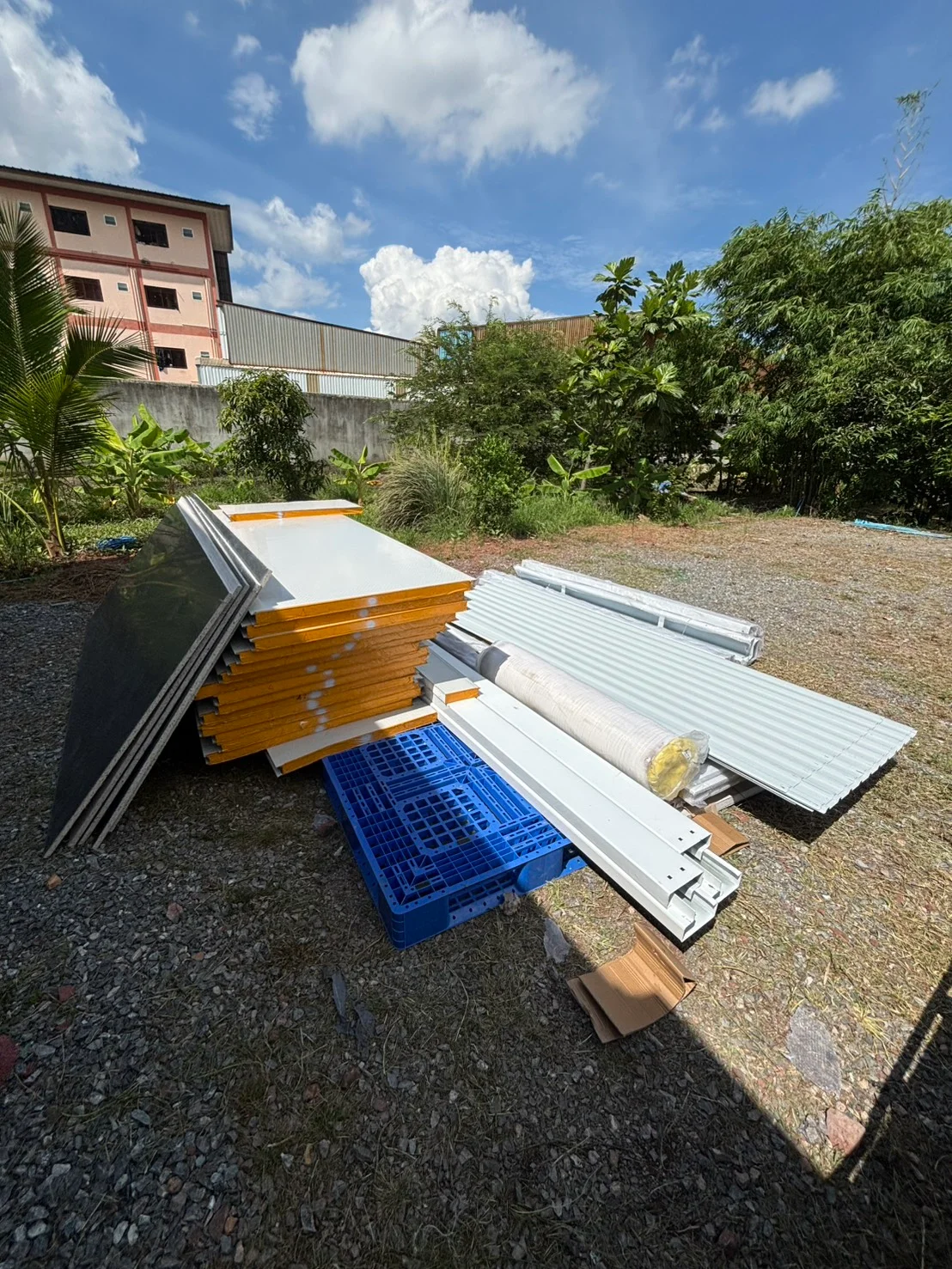
DIY knockdown homes and assembled homes may have similar dimensions, but the buyer’s responsibilities differ considerably. Compare the assembly team, site, delivery access and budget through to actual use, rather than the house price alone.
A DIY kit is worth considering if you have a team familiar with the assembly system and able to manage the site. An assembled home can reduce on-site assembly, but still needs suitable supports, delivery access and external utility connections.
Start with the scope of work
A DIY kit supplies the listed materials and components for assembly according to the model’s instructions. An assembled home has its main assembly completed before delivery, so site work focuses on positioning and connections. Neither description automatically includes foundations, transport or all utilities.
- DIY kit: check the materials list, manual, tools and responsibility for assembly.
- Assembled home: check what has been completed, the transport method and lifting space.
- Both: obtain support-point drawings and installation requirements before preparing foundations.
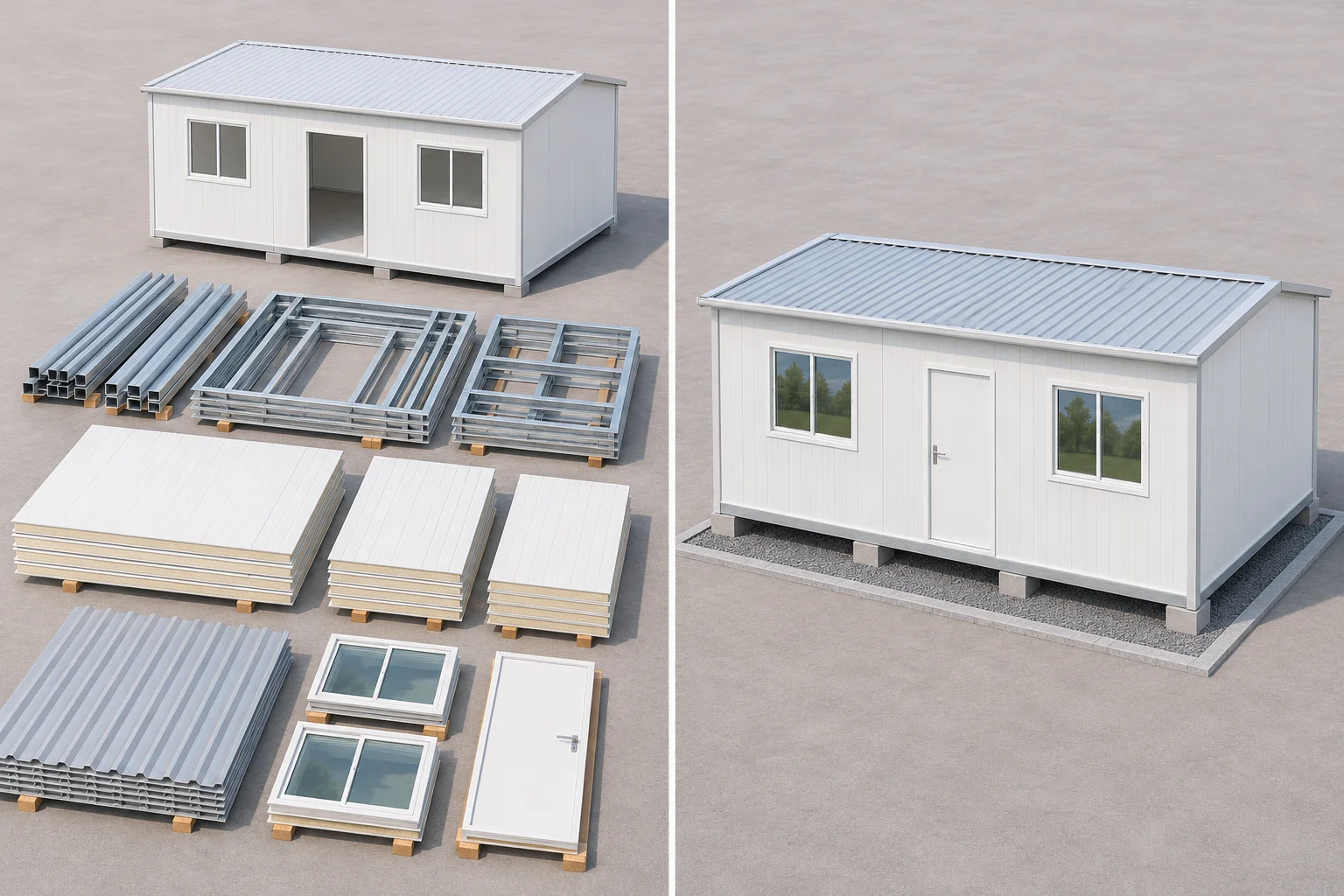 3D concept comparing kit components with an assembled home; not a model-specific materials list or installation drawing
Compare budgets on the same basis
Request quotations for comparable models, dimensions and equipment. Check whether finished flooring, electrical systems and bathrooms are equivalent. Then add assembly labour, tools, delivery, lifting, supports and external connections. Comparing a materials-only price with a partly finished home can misrepresent the final cost.
Compare the Homi A2 DIY kit with the Homi A2 assembled home, then ask the team to confirm the current quotation. Website details help you start comparing; the order documents define what you will actually receive.
Is your assembly team ready?
“DIY” does not mean one buyer should perform every task alone. Someone needs to read the manual, check components, plan the sequence and coordinate with the seller. Lifting, work at height and electrical work require suitable skills and equipment.
Ask whether your team has worked with this system, what its labour estimate covers and who will inspect the completed work. If you do not yet have a team, request both options with your site conditions included.
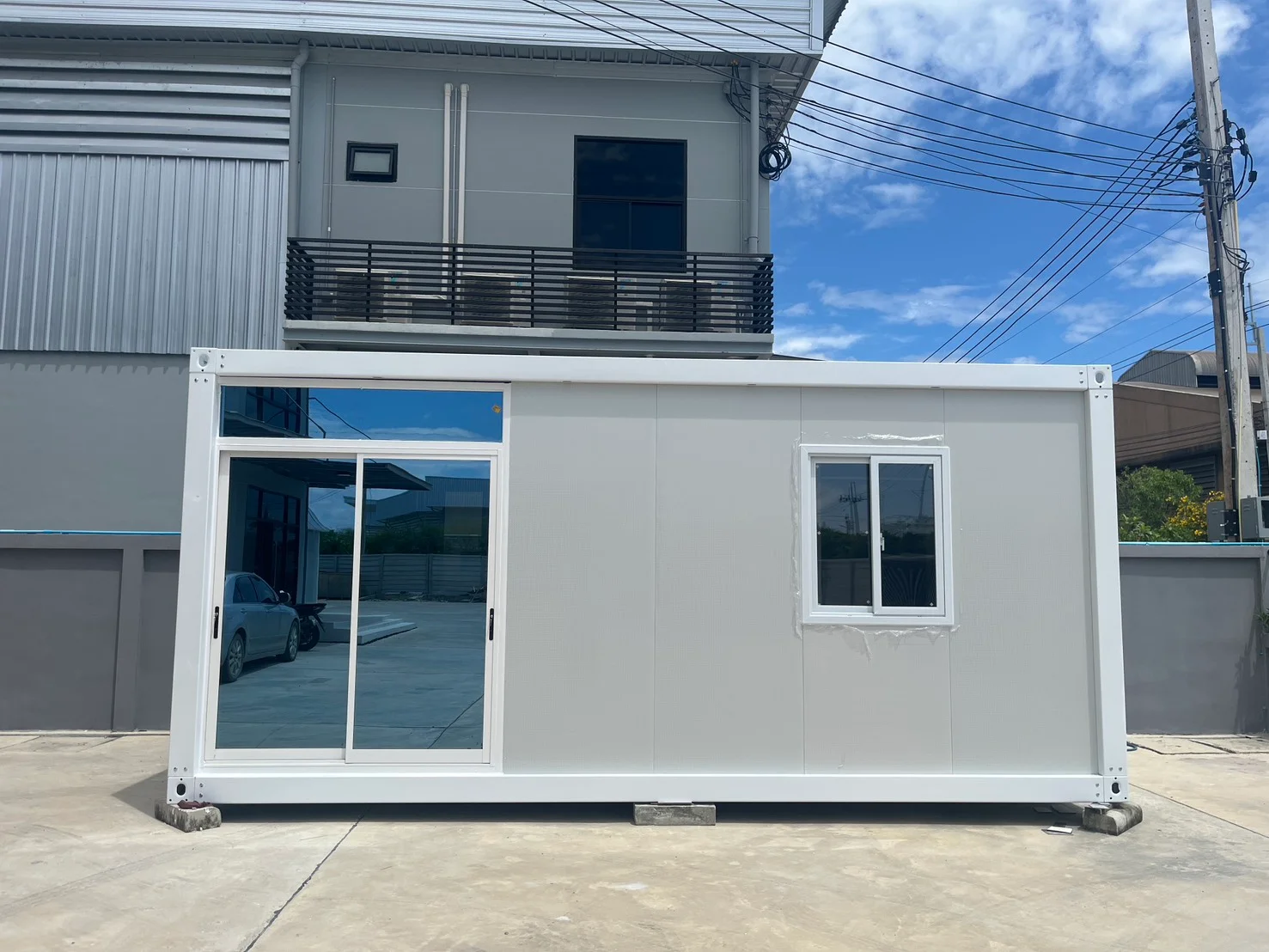 Assembled home photo from the MAKAHAUS library for comparison with a DIY kit; confirm included equipment in the quotation
Access and positioning affect the choice
An assembled home needs a route and handling area suitable for its actual dimensions. A kit also needs dry, secure storage. Do not assume either option can pass through a narrow lane before checking the vehicle and unloading method.
Send photos of the entrance, turns, overhead wires or obstructions and the final location, together with the distance from parking to installation. Use the site preparation checklist to collect the information together.
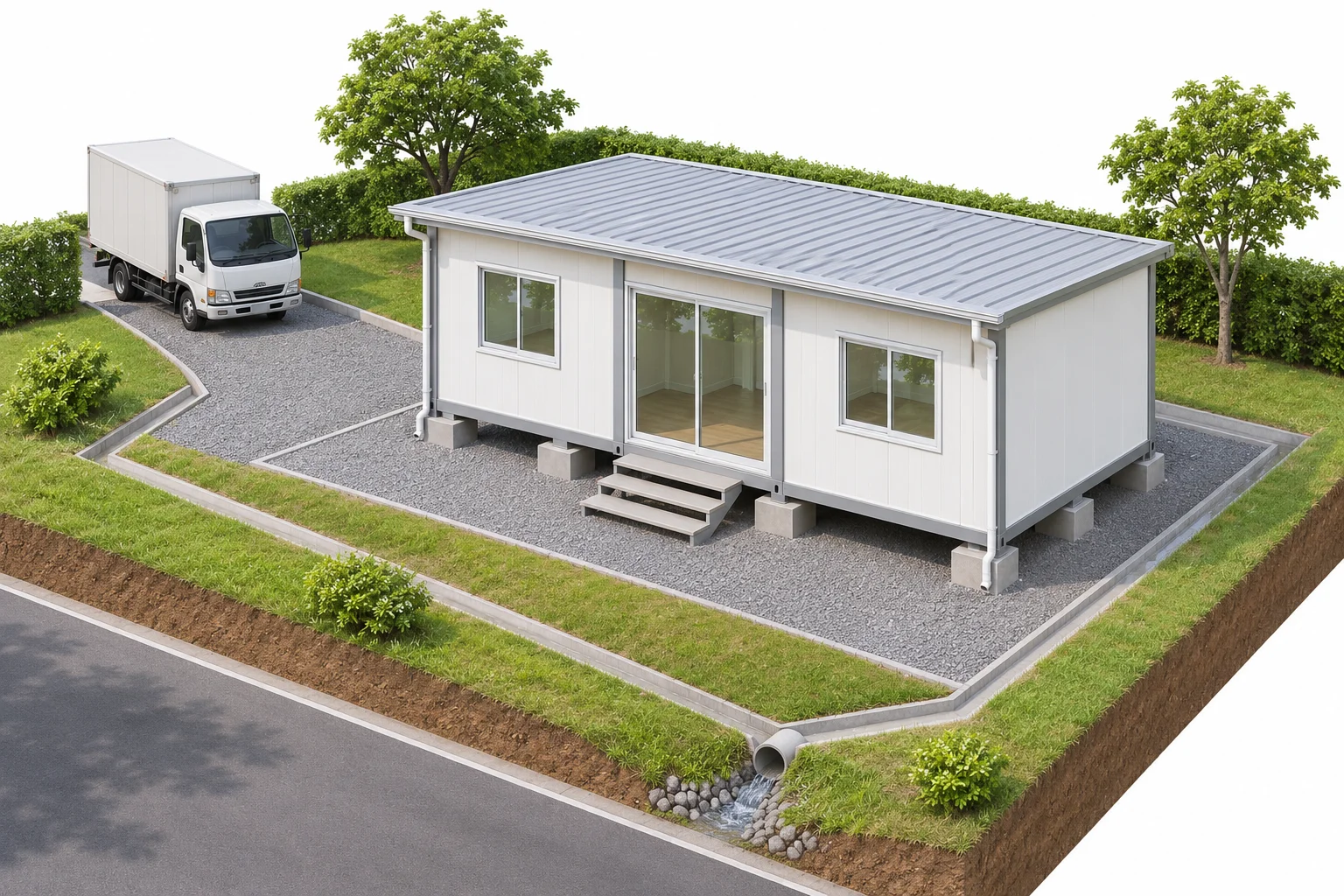 3D concept showing a house location, delivery access and drainage; not a foundation construction drawing
Match the option to your project
- Consider DIY when the assembly team, schedule and storage area are clearly arranged.
- Consider an assembled home when you want less on-site assembly and access supports the delivery method.
- If time is limited, request separate production, delivery and site-work schedules instead of interpreting “ready to use” as a completion date.
- Check warranties separately for the product, assembly and work arranged by the buyer.
Frequently asked questions
Is DIY always cheaper?
Not once all labour, tools and corrective work are included. The kit price may be lower, but the total depends on the team and site. Read about costs beyond the house price before finalising a budget.
Can I move in immediately after an assembled home is positioned?
Check supports, electricity, water and the agreed equipment first. Bathrooms and additional equipment require their associated systems to be checked before use.
Ask for advice with your site details
Start with all house designs, then send the model, intended use, district, province and site photos through MAKAHAUS contact channels. The team can clarify the questions and service scope for your project.