Rainy-season maintenance should cover the roof, openings and surrounding site. Water may come through joints, overflow from gutters or condense indoors. Recording symptoms clearly is more useful than simply sealing the place where water becomes visible.
Start from safely accessible locations. Roof work, work near electricity and joint repairs should be handled by skilled people. Do not climb onto a wet roof or during rain, and do not treat illustrations as repair details for your model.
Before the rain: inspect drainage around the house
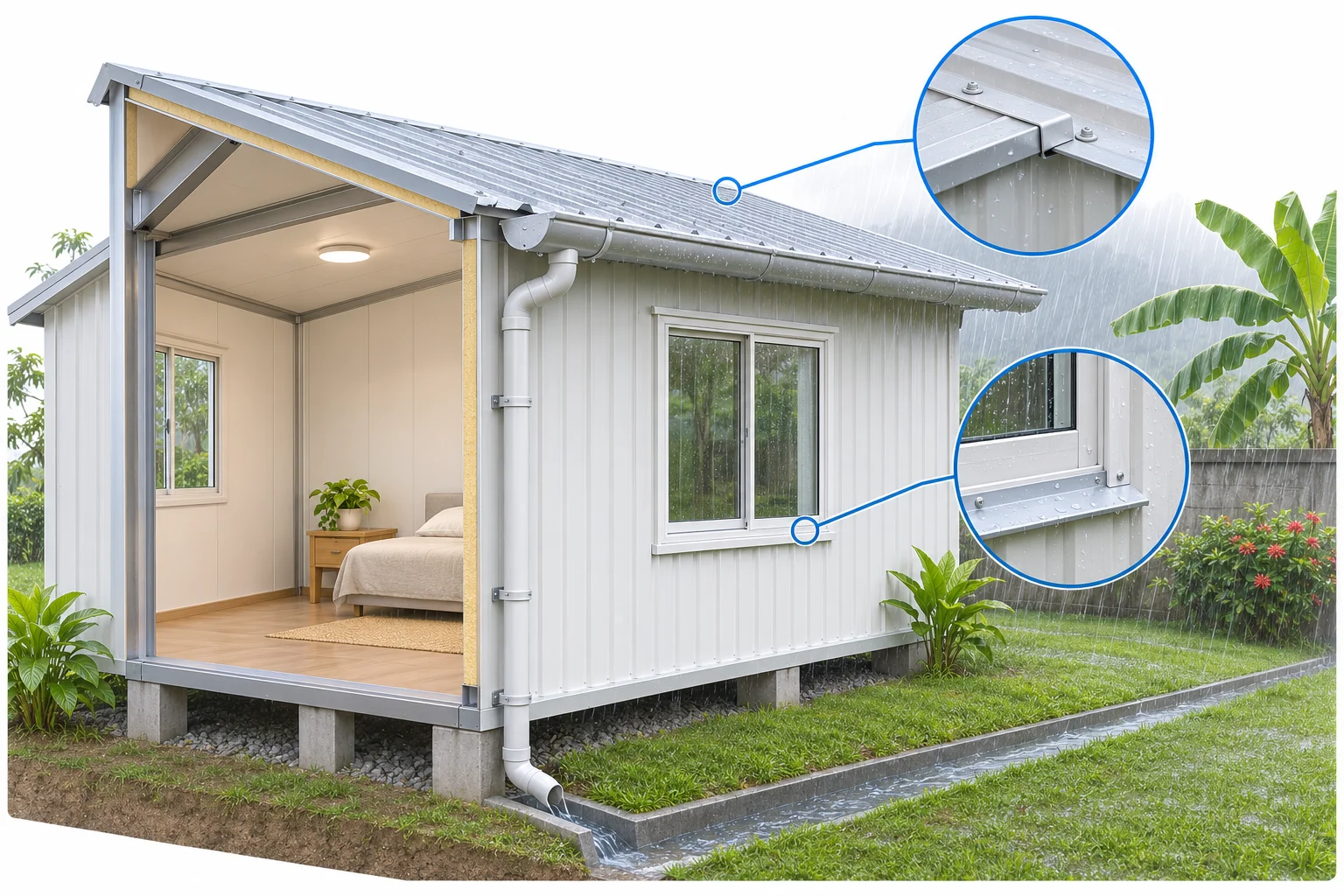
Follow the water route from the roof through the downpipes to the final discharge point. An outlet beside the supports or soil blocking the route can cause pooling even if the gutter works. Check for leaves, debris and blockages accessible from ground level, using safe cleaning methods.
Keep supports and drainage accessible for inspection. Do not cover channels with stored items or add soil against the house without assessing the effect. Read site and foundation preparation when planning a new installation.
 3D concept of a house and surrounding drainage; actual support and drainage positions require a site-specific assessment
Roofs, joints and openings
Look for displaced sheets, altered joints, cracked sealant or water marks below the roof. Avoid removing parts yourself where warranty conditions apply. Check window closing, locks, seals and frame drainage according to the manufacturer’s guidance. Do not seal designed drainage holes.
Tell the inspection team about recent awnings, shop signs, air conditioners or added wiring. New penetrations and joints may be relevant. Inspections should follow the actual design and materials, rather than using one method for every system.
Rain penetration or condensation?
Wet patches occurring during rain and in relation to wind direction are useful observations. Droplets during air-conditioner use or near cold surfaces may involve condensation. One observation is not enough to establish the cause. Record time, location, cooling use and weather to assist the inspector.
Moisture management should address both water sources and ventilation, following the general principles in the US EPA’s moisture-control guidance. For insulation and indoor air questions, see knockdown home insulation and ventilation.
 3D insulation and airflow concept for understanding moisture; not an installation detail
What to do when you find a wet patch
- Move vulnerable belongings away without approaching wet electrical equipment.
- Take wide and close-up photos, noting the date, time and direction of driving rain.
- Do not touch or repair wet electrical equipment; ask a qualified person to check safety.
- Contact the responsible team with the model, order reference and modification history.
- Ask for inspection and repair advice before covering marks that may reveal the source.
After rain and after repairs
Check whether water now drains, whether new marks or musty smells appear, and whether wet materials have been dealt with appropriately. If symptoms recur, send the new observations to the team. Follow the responsible person’s inspection plan; a dry outer surface alone does not prove the cause is resolved.
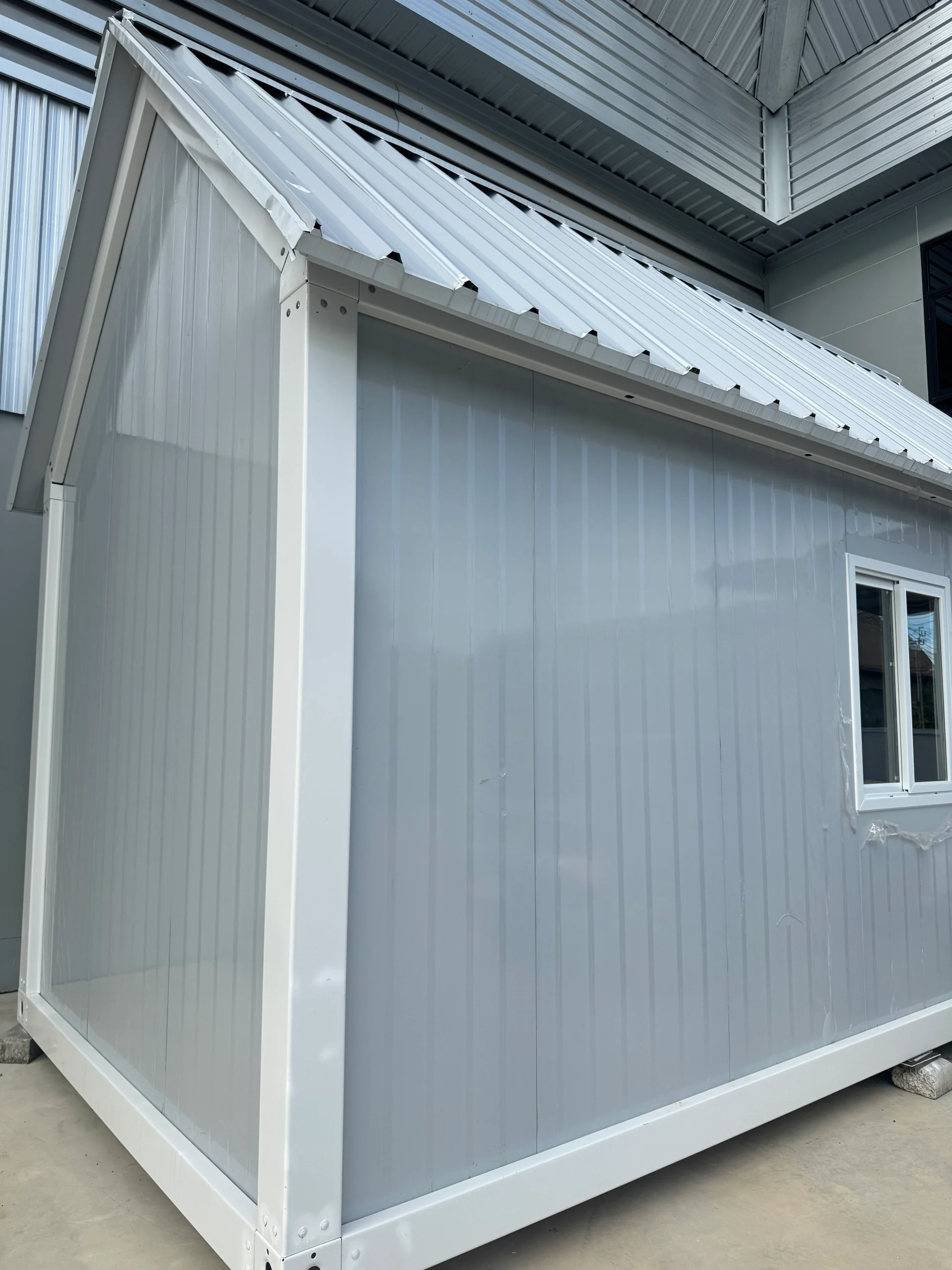 Wall and eaves detail from the MAKAHAUS photo library, illustrating joints to inspect during the rainy season
Frequently asked questions
Can silicone seal every problem area?
Do not choose a repair material without identifying the joint and existing materials. It may be incompatible or obstruct drainage. Have the seller or responsible technician confirm the repair method.
Does the warranty cover every situation?
Coverage depends on the model, purchase terms, installation and later modifications. Check your own documents. Use the MAKAHAUS contact page with photos and symptom details so the team can address the specific issue.