Before buying a knockdown home, obtain verifiable answers beyond “complete”, “ready to use” or “nationwide delivery”. Models and sites differ. This checklist helps you discuss the details and compare proposals without overlooking important work.
Record answers with supporting documents, such as quotations, materials lists, support drawings and handover terms. For unresolved issues, identify what must be checked and who will confirm it before payments become due under the agreement.
1. What are the model’s dimensions and materials?
Ask for the model name, external and internal dimensions, openings and main materials list. Obtain the details for the actual model ordered, not a similar model pictured elsewhere. If the design changes, agree the latest revision together.
2. What does the price include and exclude?
Separate the house, options, taxes, delivery, lifting, labour, foundations and external utilities. Use the additional-cost checklist and assign each job to someone. A starting price is not a total project price.
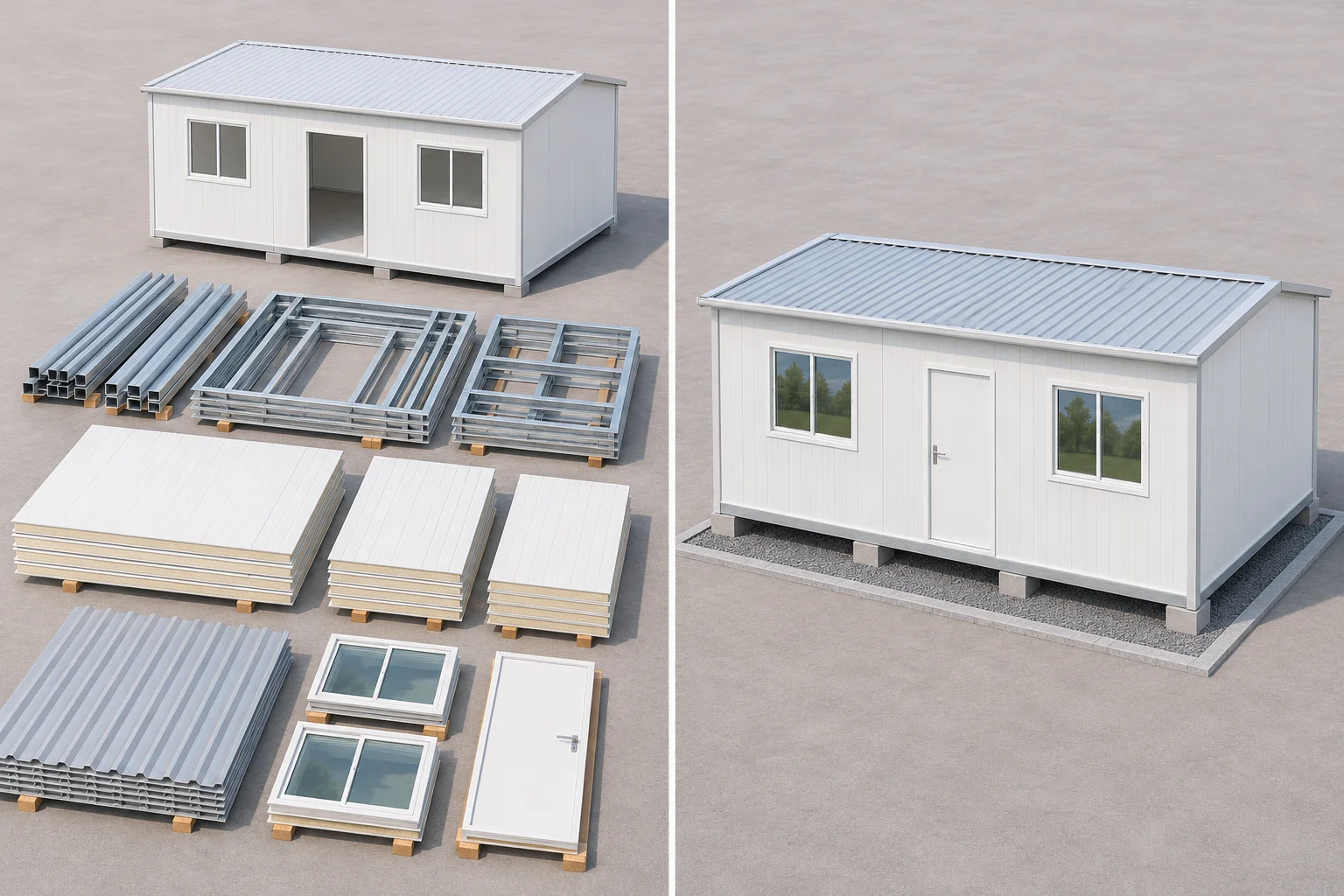 3D concept comparing a kit and assembled home to clarify work scope; not a delivery materials list
3. Is a DIY kit or assembled home more suitable?
Ask about assembly teams, tools, material storage, handling and work sequence for each option. Compare total cost with your readiness. Read DIY versus assembled homes if the choice is unclear.
4. How should the foundations and supports be prepared?
Obtain the model’s support-point drawing and installation requirements, then have a qualified person assess foundations for the ground and site. Existing concrete is not automatically suitable, and another project’s pictured supports should not be copied without assessment.
5. Can delivery and lifting equipment reach the final position?
Send photos of entrances, turns, overhead wires and the location, and ask the handling team to confirm its method. Check whether the price covers unloading or positioning at the final point, and what happens if the site is not ready.
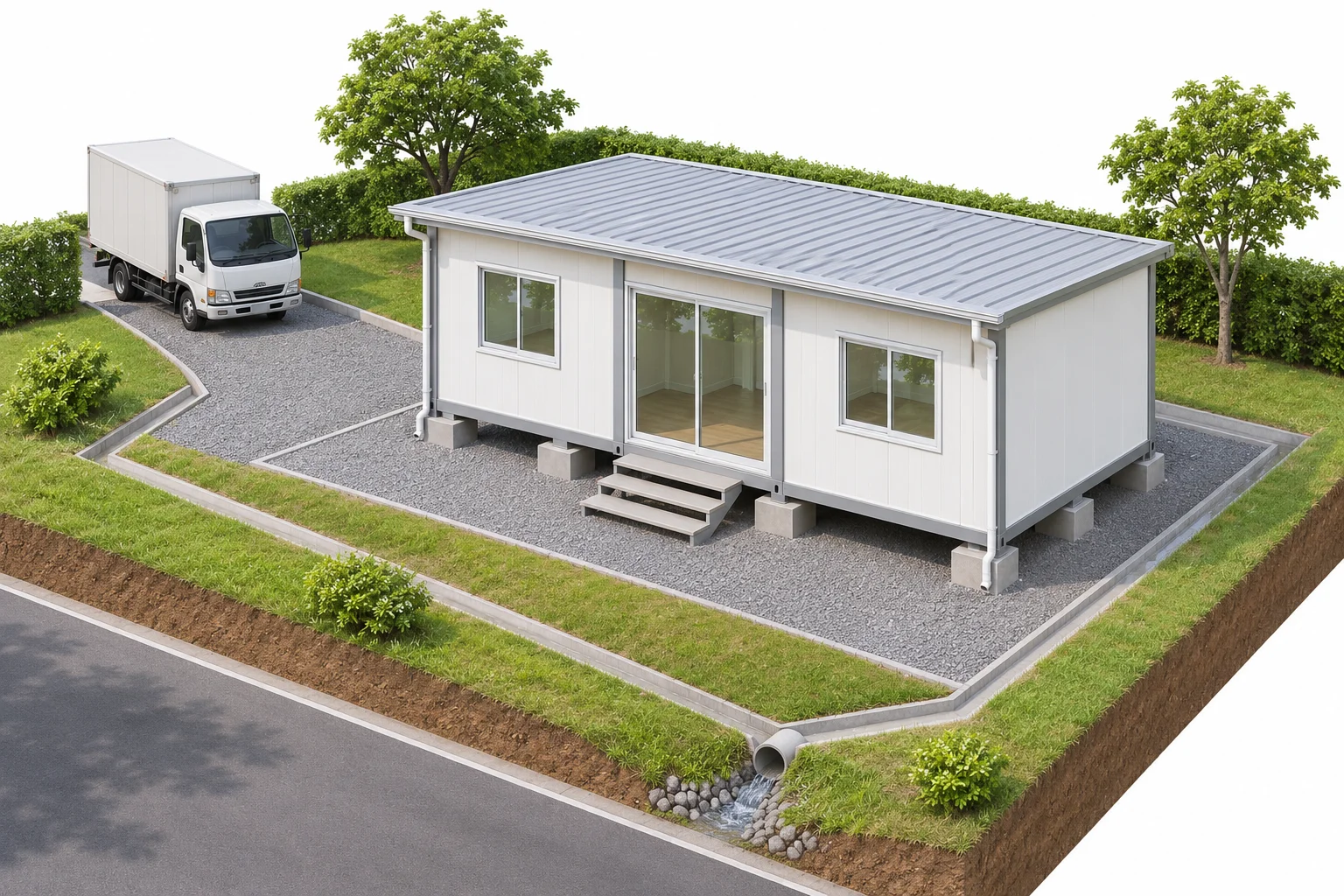 3D concept of house positioning, vehicle access and drainage; assess the actual details before installation
6. Where does the electrical, water and bathroom scope end?
Define internal versus external work, including supply cables, electrical protection, water supply, wastewater and connection points. Have a suitable technician check the actual equipment requirements. “Electrical system included” does not cover everything automatically.
7. Will heat control and ventilation suit the use?
Ask about the roof, insulation, openings and shading options in relation to orientation and operating hours. Air conditioning needs an assessment of actual heat loads. Read insulation and ventilation to prepare more questions.
8. When will production, delivery and inspection happen?
Request a schedule and the conditions that start each stage, plus inspection items and a correction-reporting process. Ask what must be ready before delivery and who coordinates schedule changes. Another customer’s timeline is not a promise for your project.
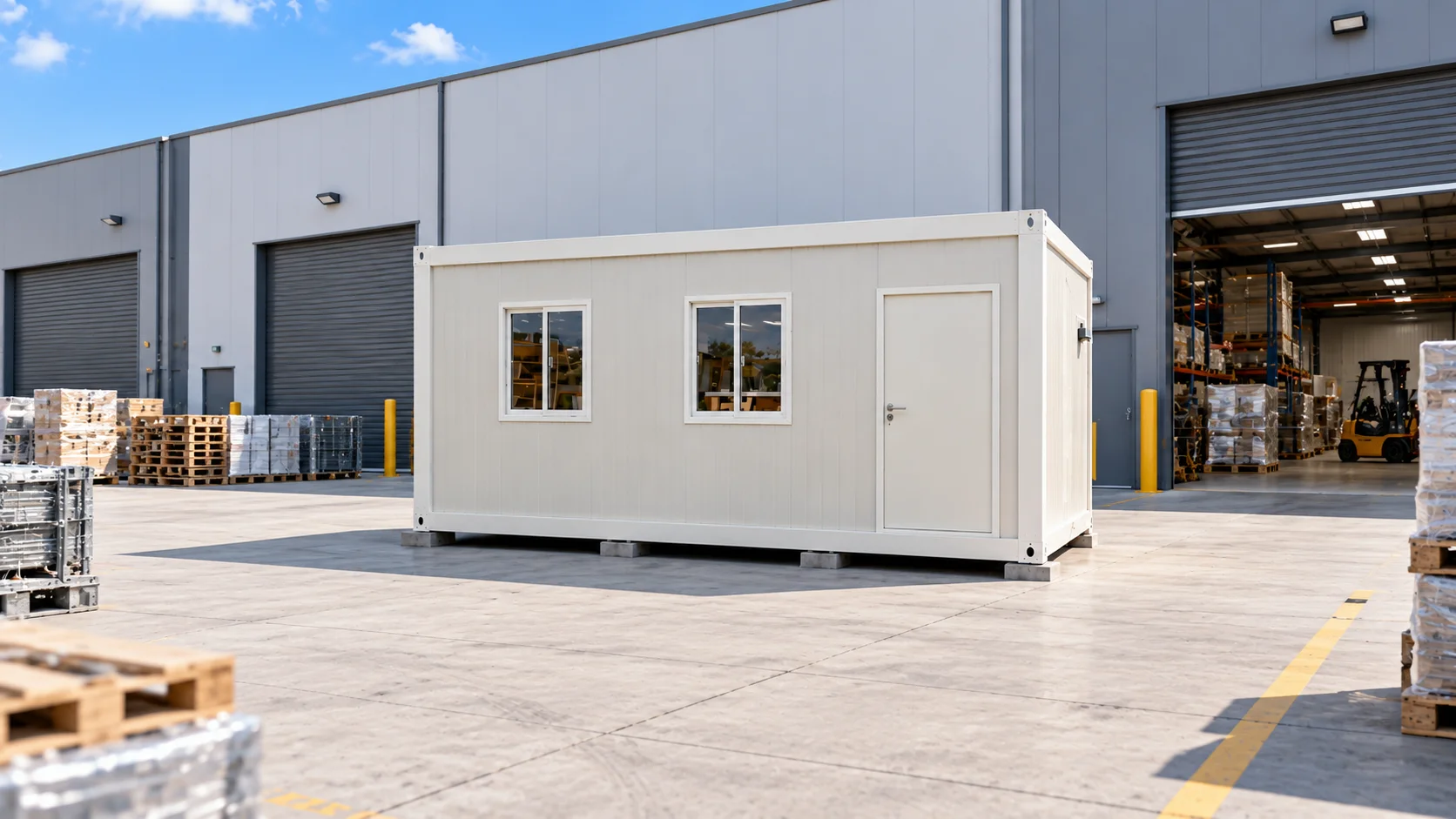 Homi A2 assembled-home product example; inspect against the ordered model’s agreed list and terms
9. What is warranted, who handles claims and what is excluded?
Check duration, coverage, reporting steps and documents required. Separate the product, assembly, site work and equipment installed by others. Ask how later drilling, alterations or relocation affect coverage. Do not substitute another model’s terms.
10. Which documents and site requirements still need checking?
Ask which product documents and drawings the seller provides. Check land, building and intended-use requirements with the relevant authorities or professionals, especially for shops and commercial accommodation. Buying a knockdown home does not itself establish the right to install it or operate a business everywhere.
Use the checklist before requesting a quotation
Choose a house design, note the model and send your intended use, required size, district, province and site photos through MAKAHAUS contact channels, together with unanswered questions.
If your site is not ready, start with the site preparation guide. For business projects, extend the list using prefab coffee-shop planning or the homestay and resort checklist.